Cooking tips
Rice Never Turns Out Right? It's Probably Your Method
Two ways to cook rice, two completely different results. Absorption gives separate, fragrant grains. Boiling in lots of water often gives glue. Here's why.
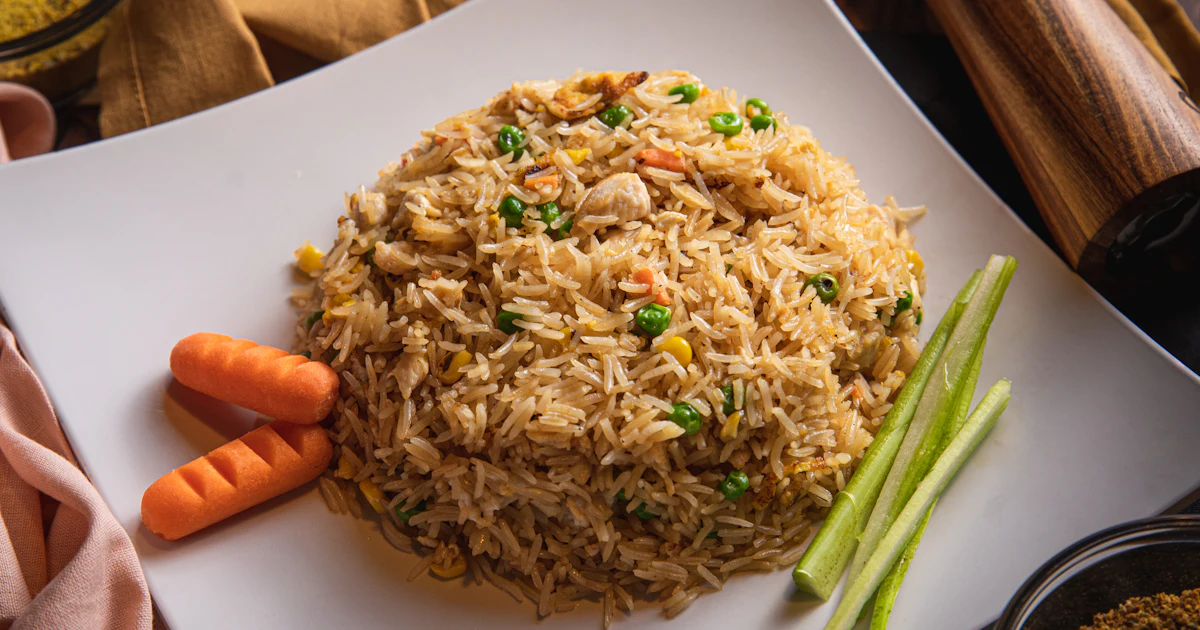
Rice is probably the food French home cooks mess up most often, which is ironic because it's also one of the simplest. Sticky, overcooked, watery, or the opposite, hard in the center: the complaints are always the same. In the vast majority of cases, the problem isn't the rice. It's the method.
Boiling in lots of water: why it fails
The big-pot method, a lot of boiling water, cooked uncovered, then drained, works for pasta but is a disaster for long-grain rice. The surface starch of the grains leaches heavily into the water during cooking. When you drain, the grains are stripped, soft outside and sometimes still hard inside, with a gluey texture that draining doesn't fix.
Some people rinse the rice after cooking to correct this. It partly works, but at the cost of cooling the rice and depriving it of the residual heat that finishes the cooking. The result: cold, bland rice.
Absorption: the method that works
The principle is simple: the rice cooks in exactly the amount of water it will absorb. No surplus to drain, no starch lost. The grains swell as they absorb the liquid, steam in their own moisture, and stay distinct.
The ratio for basmati or parboiled long-grain rice: 1 part rice to 1.5 parts cold water by volume. For sushi rice or short-grain rice: 1 part to 1.2 parts. These ratios are a starting point. Try it once and write down what you used.
The technique, step by step
Rinse the rice in cold water until the water runs clear. This removes the surface starch that would make the grains stick together. Put it in the pot with the cold water. Bring to a boil over medium-high heat, then immediately turn it down to very low. Cover tightly. Cook 12 minutes for basmati, 15 minutes for standard long-grain rice. Don't lift the lid: the trapped steam is what cooks the top layer.
After cooking, turn off the heat and let it rest with the lid on for another 10 minutes. This rest lets the residual steam finish cooking the grains and spreads the moisture evenly. Open it too early and you get grains that are wet on top and still hard underneath.
Fluff, don't stir
Once the 10 minutes are up, use a fork to gently fluff the rice, moving up from the bottom, not in circles. The goal is to separate the grains and let excess steam escape. If you stir vigorously, the grains get crushed and you end up with a compact mass.
The case of brown rice
Brown rice needs more water (1 part to 2 parts) and more time (30 to 35 minutes of cooking plus 10 minutes of rest). The bran around it slows absorption. Never mix up its cooking times with those of white rice.
One last point that rarely gets mentioned: rice that fails with the absorption method is often rice cooked over too high a heat. The heat has to be truly low after the initial boil. If you smell something burning before the end, turn it down or put a heat diffuser under the pot.
Storing and reheating rice safely
Cooked rice should cool quickly, ideally spread in a thin layer, and go into the refrigerator within an hour of cooking. It keeps one to two days in the cold and should be reheated only once, until it's steaming hot all the way through. To freeze it, see the 5 oz (150 g) portions flattened in zip bags described in our freezing guide.
Frequently asked questions
Do you need to rinse rice before using the absorption method? Yes, until the water runs clear: it removes the surface starch that makes grains stick together. Why is my rice sticky? Often because it wasn't rinsed, or because the lid was lifted during cooking. What ratio for basmati? One part rice to 1.5 parts cold water by volume, 12 minutes over very low heat, then 10 minutes of rest with the lid on.