Kitchen gear
Small Kitchen Appliances: What You'll Actually Use and What Gathers Dust
Immersion blender, kitchen scale, meat thermometer, countertop blender: what earns the space it takes up, and what isn't worth the sticker price.
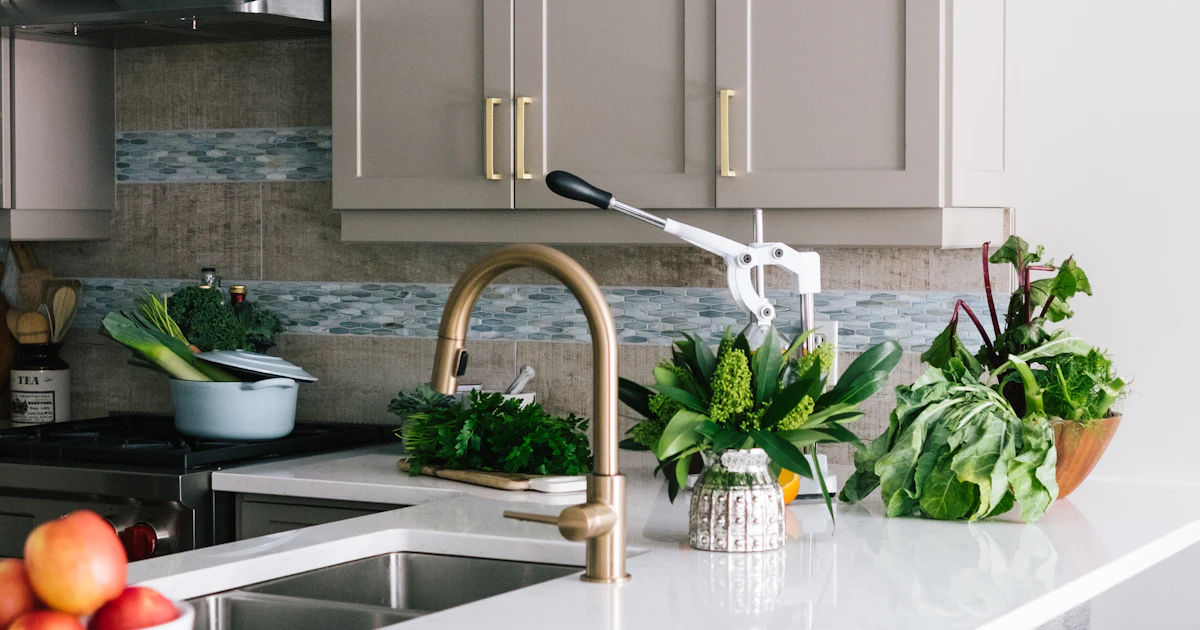
The kitchen is a gadget graveyard. The manual espresso machine, the mandoline slicer that nearly cost you a finger, the steamer that has sat in its box for three years. If you drew up an honest list of what's really used in 90% of households, you'd be surprised how short it is.
The kitchen scale: the only truly essential appliance
No battery pack, no motor. Just a scale. It's the most underrated tool in the home kitchen and probably the one that eliminates the most errors. Measuring by volume (spoons, cups) is imprecise for baking: 100 g of packed flour and 100 g of well-aerated flour don't take up the same volume. A scale removes that variable and makes recipes repeatable.
What you need: electronic, accurate to the gram, a capacity of at least 11 lb (5 kg), and a tare function (zero after adding an ingredient). Under about $22 (Etekcity, Terraillon, several generic brands on Amazon), you'll find perfectly adequate models. Price isn't the deciding factor here: a $13 scale does exactly the same thing as a $55 one if it's accurate and has a decent capacity. The criteria that count: how fast the reading settles and how readable the screen is in poor light.
The immersion blender: yes, but not just any one
The immersion blender (or stick blender) is the most versatile appliance in the kitchen after the knife. It blends soups right in the pot, emulsifies sauces, makes smoothies, pestos, vinaigrettes. It fits in a drawer and washes in thirty seconds under the tap.
The problem is power. A 250W immersion blender struggles with fibrous vegetables (celery root, hard squash) and overheats. The motor burns out within two or three years of regular use. Models between 600 and 800W do the same job in less time, without straining. Bamix is the professional reference (around $165-220), used in restaurants. For the home kitchen, the Braun MultiQuick 7 or 9 ($55-90, 700W+, speed switch technology) gives excellent results without the price of the pro version.
The cooking thermometer: small price, big impact
Already mentioned in the article on low-temperature cooking, but it's worth repeating: an instant-read probe thermometer is the tool that most improves the precision of cooking meat, poultry and fish, for $17-22. The ThermoPro or Etekcity models are reliable, fast (a reading in 2-3 seconds) and accurate. The Thermapen ($90-110, a reading in 1 second) is the top of the line, justified if you cook meat often and precision is an obsession. Otherwise, $17 does the same job.
The countertop blender: not for everyone
A countertop blender (Vitamix, Blendtec, or their cheaper alternatives) is irreplaceable for one thing: smoothies with hard ingredients (ice, frozen fruit, seeds) that an immersion blender can't handle cleanly. For soups, sauces and pestos, the immersion blender does the same without cluttering the counter.
If you make smoothies every day, a Vitamix A2300 (around $500-600) lasts ten years and produces a texture nothing else approaches. If you make a smoothie now and then, any $45-65 blender (Moulinex, Hamilton Beach) is enough. Don't buy a Vitamix to make smoothies twice a month: you're paying for performance you don't use.
What isn't worth the sticker price
The air fryer: useful for fries and leftover pizza, but a conventional oven with a rack does 80% of what it does, and truly good fries (Robuchon's, made with butter) don't belong in an air fryer. If you don't have an oven, it can help out. Otherwise, it's a big chunk of cabinet space.
The electric yogurt maker: a thermometer, a quart of milk and a jar do the same thing for a $3 investment. The rice cooker, if you have a lid and a pot: the absorption method works perfectly without an extra appliance. The soda machine: the CO2 cartridges cost more than bottles of Perrier from about the twelfth month.
The question to ask before any purchase: do I already have a technique that works for this, and does this gadget replace it or add to it? In the kitchen, "add to it" is rarely a good answer.